Thursday, May 28, 2015

Protests shine spotlight on challenges for Ethiopian Jews in Israel - CNN.com

By Oren Liebermann, CNN


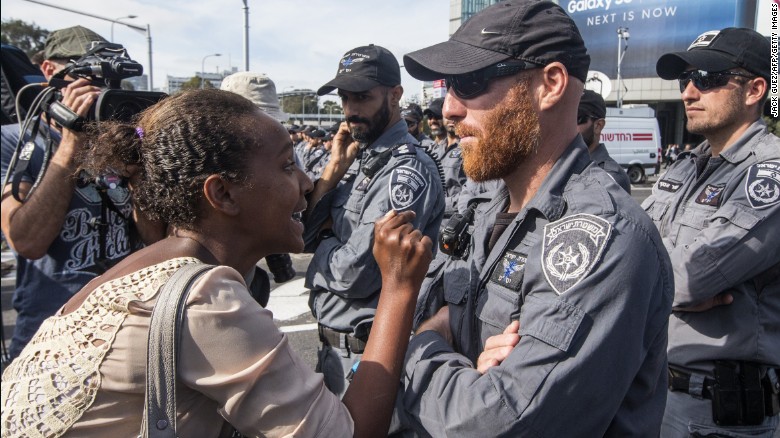
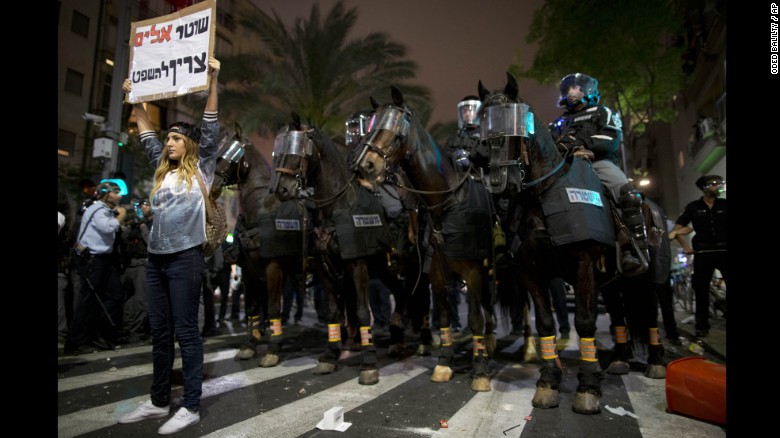
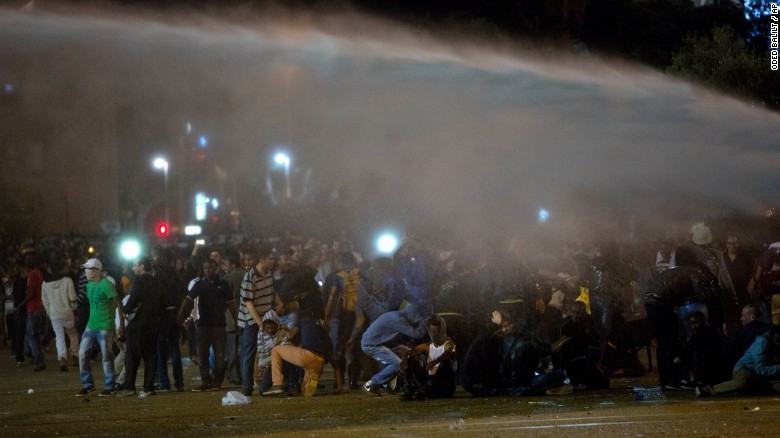
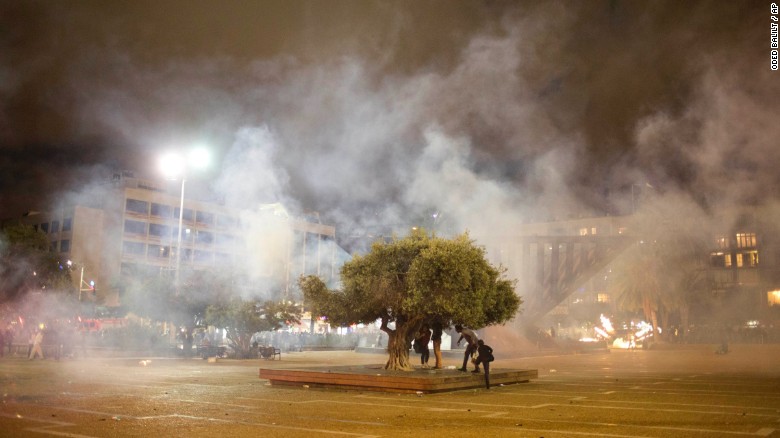
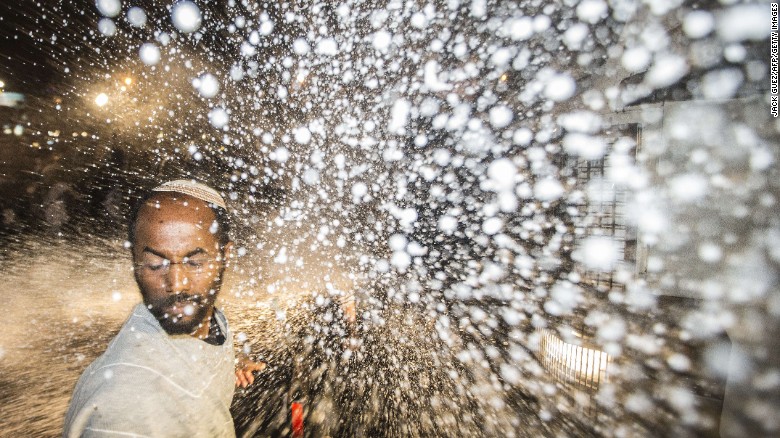
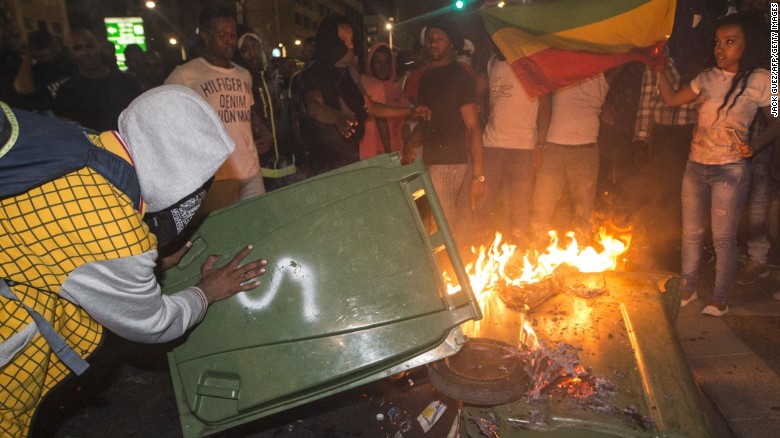
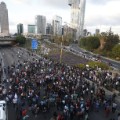
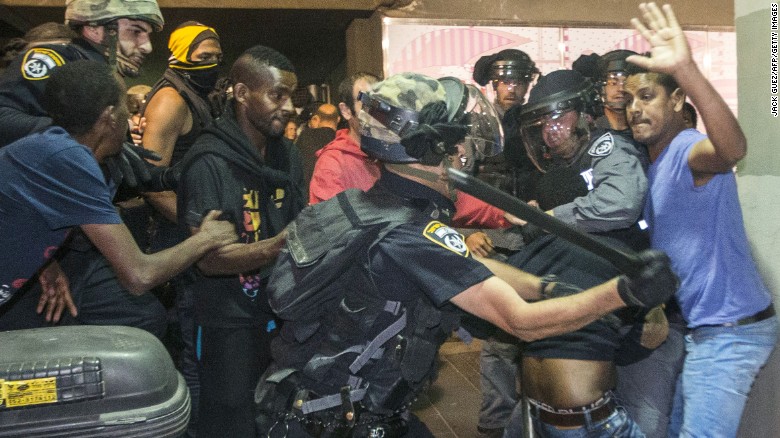
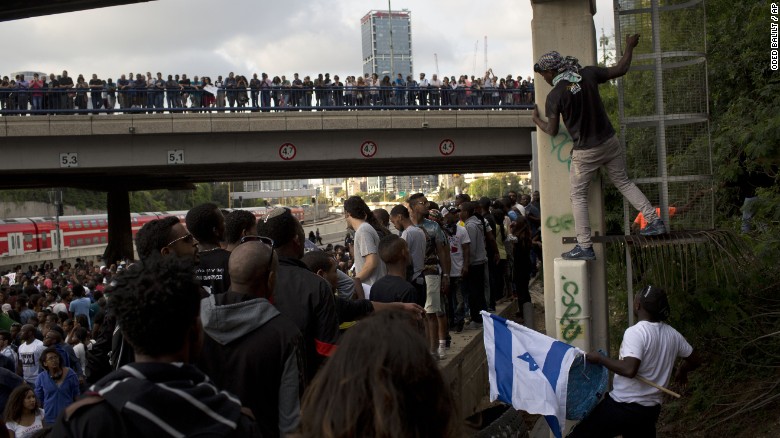
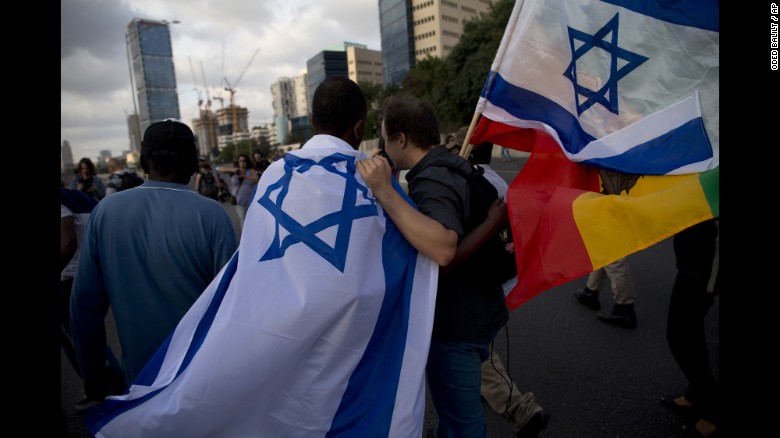
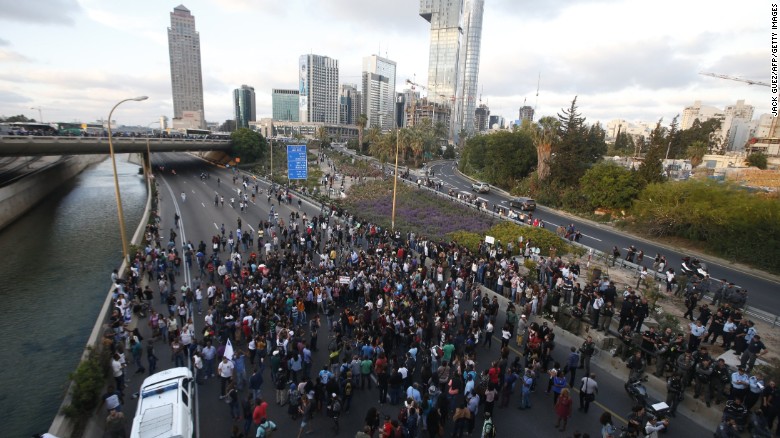
Ethiopian protestors fill a street in Tel Aviv during a recent demonstration.


Story highlights

  • Thousands of Ethiopian Jews have been protesting in Tel Aviv, across Israel
  • Many were born in Israel, but don't feel accepted there, says Tel Aviv's Ethiopian-born deputy mayor
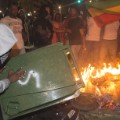
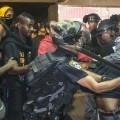
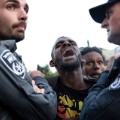
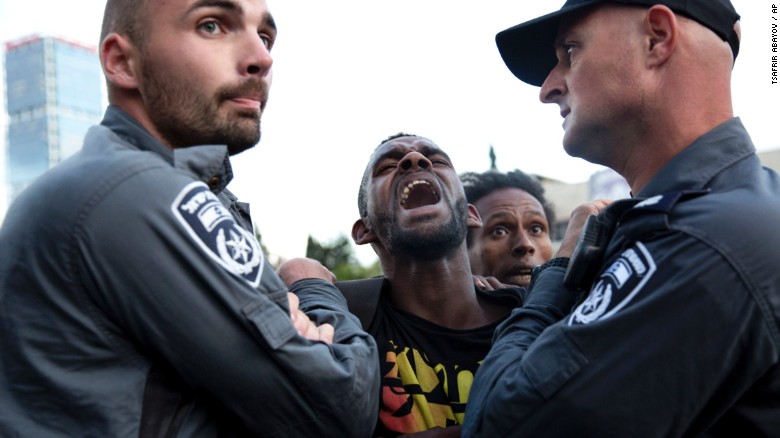
(CNN)Decades of frustration boiled over on the streets of Tel Aviv and across Israel, as thousands of Ethiopian Jews marched against discrimination in a series of protests. It wasn't the first time this community has taken to the streets, but now they have the country's attention, following a viral video that showed two Israeli police officers beating an Ethiopian-Israeli soldier in uniform. Both officers were fired.
The video was a tipping point, and a symptom of a much bigger problem. Ethiopian Jews say they are treated like second-class citizens.
Police beat Ethiopian-Israeli soldier, sparks protests

Police beat Ethiopian-Israeli soldier, sparks protests 02:44
PLAY VIDEO
"These young people were born in Israel and they feel Israeli, but still people see them as Ethiopians," said Mehereta Baruch-Ron, the deputy mayor of Tel Aviv from the left-wing Meretz party. Baruch-Ron is an Ethiopian Jew who came to Israel when she was 10 years old, escaping Ethiopia on foot to Sudan before she could fly to Israel.
"Ethiopian Jews dreamed for 2,000 years to get to Jerusalem," she said, remembering well her excitement as a child when her father told her they would be leaving for Israel.
Baruch-Ron is a success story for the Ethiopian community, from an illiterate immigrant to a city leader. The demonstrations are from a new generation of Ethiopians, born in Israel, who demand equal opportunity and fair treatment from police, she said.
    "The anger is more about the lack of programs, lack of opportunities and we have to remember that there is a big gap that we have to close, so we need some investments in order to close this gap," said Baruch-Ron.

    A struggle for acceptance

    Many of the 140,000 Ethiopian Jews living in Israel today came over in two massive airlifts in the late 80s and early 90s. The Ethiopians were welcomed with open arms, but the dream gave way to new challenges. The government set up absorption centers throughout Israel to help Ethiopians get used to a new country. But many Ethiopians say, too often, they struggle to find acceptance.
    Unemployment in the Ethiopian community is 13%, nearly three times the national average, and Ethiopians earn a third less than Israelis. According to Tebeka, an Ethiopian-Israeli advocacy group, Ethiopians make up less than 2% of Israel, but nearly 20% of the youth prison population.
    Ethiopians have been protesting discrimination for years. Tebeka receives 1,000 calls a year about discrimination against Ethiopians. But this time, the protests made a difference. The Prime Minister promised to end racism in Israel, setting up a ministerial task force, while the chief of police is working to end police discrimination.
    "At the end of the day, (the chief of police) admitted there is a problem. There is police violence against the Ethiopian community and that, by itself, is I think a good starting point," says Fentahun Assefa-Dawit, executive director of Tebeka.
    The Ethiopian community has had at least six meetings with police, says Assefa-Dawit, and the department has agreed to recruit more Ethiopian police officers while looking at other measures to rebuild trust with the Ethiopian community.
    Community leaders say these changes are a major step in the right direction, but they say they have to work fast, while they still have the country's attention.
    Sunday, May 24, 2015

    Do Black Lives Matter In Israel? | Al Jazeera America


    Ethiopian Jews are protesting in Israel over alleged police brutality and racism

    Citizens of Ethiopian descent have taken to the streets of Israel in recent weeks to protest alleged police brutality and widespread racism.
    The Ethiopian Jewish community, which comprises 2 percent of the Israeli population, has long complained of police criminalizing young black men, but the issue was amplified in April after a video of officers violently beating an Ethiopian-Israeli soldier went viral.
    The protesters – some of which have clashed with police – say black lives don’t matter in Israel, and are seeking equal treatment under the law.
    So what’s life like for Ethiopian Jews living in Israel? AJ+’s Dena Takruri takes a look.

    Saturday, May 23, 2015

    UN investigates Briton on death row in Ethiopia | World news | The Guardian


    Yemi Hailemariam outside the Foreign Commonwealth Office
     Yemi Hailemariam outside the Foreign Commonwealth Office to demand the release of her partner, Andargachew Tsege, who is being held in in Ethiopia. Photograph: Alamy


    The detention of a British citizen held on death row in Ethiopia for almost a year is being investigated by the United Nations official responsible for preventing torture.
    Andargachew Tsige was arrested last June while in transit through Yemen’s main airport and forcibly removed to Addis Ababa. He is the leader of an opposition party and had been condemned to death several years earlier in his absence.


    Juan Mendez, the UN special rapporteur on torture, has written to the Ethiopian and UK governments saying he is investigating the treatment of Tsige. There are claims Tsige is being deprived of sleep and held in isolation.
    His partner, Yemi Hailemariam, also a British national, who lives in London with their three children, said she had only spoken to him once by telephone since his abduction. “He’s in prison but we have no idea where he is being held,” she said. “He said he was OK but I’m sure the call was being listened to.
    “He had been in Dubai and was flying on to Eritrea when the plane stopped over in Yemen. He hadn’t even been through immigration. We think Yemeni security took him and handed him over to the Ethiopians.
    “They say there was an extradition agreement but it was so quick there was no time for any semblance of a legal hearing. Yemen and Ethiopia had close relations then. The [Ethiopian] government have put him on television three times in heavily edited interviews, saying he was revealing secrets
    “He has been kept under artificial light 24 hours a day and no one [other than the UK ambassador] has had access to him. I feel angry with the Foreign Office. They know they could do more. They have political leverage they could use but have not done so.”
    Tsige, 60, known as Andy, had previously been secretary general of Ginbot 7, a political opposition party that called for democracy, free elections and civil rights. He first came to the UK in 1979. The Ethiopian government has accused him of being a terrorist. In 2009, he was tried with others in his absence and sentenced to death.
    No effort was made to extradite him to face the court. A US embassy cable, released through WikiLeaks, described the trial as “lacking in basic elements of due process”.
    “[Andy] is a politician, not a terrorist,” said Hailemariam. “It’s just the Ethiopian government that thinks it does not need to make any space for the opposition. A delegation of British MPs, including Jeremy Corbyn, were stopped from travelling to Ethiopia in February. They are hoping to try again.”


    Tsige was accused by the Ethiopian government of being a terrorist. In 2009, he was tried in his absence and sentenced to death.
    Pinterest
     Tsige was accused by the Ethiopian government of being a terrorist. He was tried in his absence in 2009 and sentenced to death. Photograph: Alamy


    Hailemariam’s dissatisfaction with the UK government’s response follows the release of internal Foreign Office memorandums earlier this year that appeared to show official reluctance to apply pressure on Ethiopia to obtain Tsige’s release. 
    The UK prime minister, David Cameron, has, however, written a letter to his Ethiopian counterpart, Hailemariam Desalegn, raising concerns about Tsige. 
    A Foreign Office spokesman said: “The foreign secretary has raised this case with the Ethiopian foreign minister on 13 separate occasions. We will continue to lobby at all levels, conveying our concern over Andargachew Tsige being detained without regular consular visits and access to a lawyer.”
    Maya Foa, director of Reprieve’s death penalty team said: “Andy Tsige was illegally kidnapped and rendered to Ethiopia, where he has now been held in a secret location for nearly a year. The UN special rapporteur is right to raise concerns about torture – especially given Ethiopia’s terrible record on human rights, and their denial of any meaningful consular access.
    “It is crucial that the British government now takes stronger action on this case. The way Andy has been treated is in serious violation of international law and the most basic principles of justice – the UK must push for his immediate release.”
    Tsige’s lawyer, the barrister Ben Cooper of Doughty Street chambers, said: “[He] was abducted at an international airport, hooded and rendered to Ethiopia, where he has been held incommunicado under a death sentence that was passed unlawfully in his absence. He remains in isolation nearly a year later with only occasional access to the open air. 
    “His detention violates all minimum standards of treatment. We ask the Foreign Office to follow the lead of the UN special rapporteur on torture to demand an immediate end to Mr Tsege’s torture by seeking his return home to his family in England. This is a clear case of kidnap and should be treated as such.”
    Elections are taking place in Ethiopia this weekend. Tsige’s family hopes the government will relax restrictions on the opposition once voting is over.
    In a lengthy statement, the Ethiopian embassy said that Ginbot 7 had been proscribed a terrorist organisation by the country’s parliament. Tsige, as general secretary, it added, was charged with “conspiring to perpetrate terror and violence in Ethiopia by planning, training, financing, and organising terrorist recruits in Eritrea” and found guilty of “conspiring and working with and under Ginbot 7, to overthrow the legitimate government of Ethiopia through terrorist acts”.
    Following conviction and sentence, the embassy continued, the government sent a formal request of assistance to those states with which Ethiopia has an extradition treaty, requesting them to transfer all sentenced individuals in the event of their presence on their territory. 
    “It was on the basis of this request, and the existing extradition treaty with the Republic of Yemen, that [he] was extradited to Ethiopia. Accordingly, [he] is currently in detention at the federal prison,” it said.
    The statement added: “Mr Tsige was serving as a Trojan horse, assisting the Eritrean government’s repeated and ongoing attempts to wreak havoc and instability in the sub-region. Mr Tsige is well-treated and has received visits from the British ambassador to Ethiopia. He has also spoken to his family on the phone.”

    Saturday, May 16, 2015

    Burundi's capital sees fresh anti-regime protests


    by  - 

    4


    A fresh wave of anti-regime demonstrations broke out Saturday in Burundian capital Bujumbura against plans by President Pierre Nkurinziza to seek a third term in office.
    Protesters blocked several major streets and erected barricades in a number of neighborhoods in the capital.
    “We have no one but ourselves to depend on, and now we are in a war against the army and police,” Philippe Ryumeko, a young protester from the neighborhood of Nyakabiga, told Anadolu Agency.
    Demonstrators and human rights activist also lamented the absence of coverage of developments in the country by private media.
    Innocent Muhozi, head of the privately-owned broadcasting network Renaissance, told Anadolu Agency that “the only radio station available now is the national one, which only broadcasts pro-regime messages.”
    The situation remains tense in Burundi after a group of generals on Wednesday led by former intelligence chief Godefroid Niyombare announced the dismissal of Nkurunziza, who was in Tanzania at the time to attend a regional summit.
    The following day, however, Nkurunziza returned to Burundi, announcing that the coup attempt had failed.
    On Friday, Burundian security forces arrested three leaders of the failed coup attempt against Nkurunziza.
    Burundi has been dogged by instability since April 26, when anti-Nkurunziza demonstrators took to the streets to protest the president’s plan to seek a third term in office.
    The country’s opposition says Nkurunziza does not have the right to seek a third term, citing Burundi’s constitution, which limits the number of terms a president can serve to two.